Exit Ramp or Dead End? A No-Nonsense Guide to Deciding if That Random Town is Worth Your Time
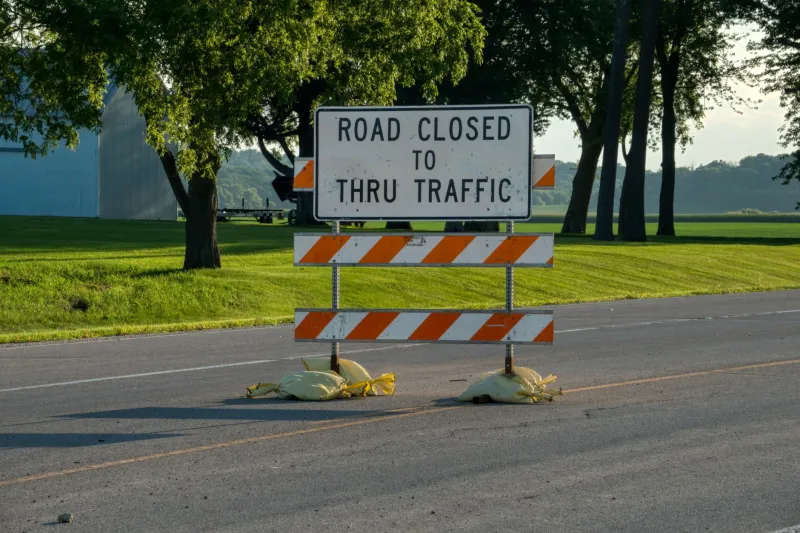
It happens somewhere around mile 200 of a long drive. You're on autopilot, the playlist is doing its thing, and then — there it is. An exit sign for a town you've never heard of. Maybe it has a name that sounds vaguely interesting. Maybe someone mentioned it offhandedly three weeks ago and you filed it in the back of your brain without knowing why. Maybe you just have a feeling.
And then the exit is behind you and you're still on the highway and you spend the next fifty miles wondering.
We've all been there. And we've all developed our own half-baked systems for deciding whether to pull off or keep going. Most of those systems are basically vibes. Which is fine — vibes have led to some genuinely great detours. But they've also led to forty-five minutes in a closed-on-Tuesdays town with one gas station and a dollar store.
After years of road-tripping and a lot of both triumphant discoveries and spectacular misfires, here's the decision-making framework that's actually served us well.
Step One: Trust the Tingle (But Verify It)
Your gut is a data processor. It's taking in information — the name of the town, something someone once said, a visual from a photo you scrolled past — and converting it into a feeling. That feeling is worth taking seriously, but it's not the whole story.
The first question to ask when you feel the tingle is: where is this feeling coming from? If you can trace it to something specific — a recommendation, a memory, a half-remembered article — that's a stronger signal than a vague sense that the name sounds cool. Both are worth exploring. But they warrant different levels of commitment.
A recommendation from an actual human who's been there? That's a green light. A hunch based on vibes alone? That's a yellow light — proceed, but with calibrated expectations.
Step Two: The 48-Hour Window Check
Before you commit to a detour, do a fast 48-hour window check. This isn't deep research — it's a two-minute scan designed to answer one question: Is there anything happening or existing in this place that I can't get somewhere else?
Pull up Google Maps and look at the photo results first. Not the reviews — the photos. Photos don't lie the way descriptions do. If the photos show interesting architecture, unusual landscapes, a bustling farmers market, or a waterfront that looks alive, that's a good sign. If every photo is a chain restaurant and a parking lot, you have your answer.
Then do a quick search for "[town name] things to do" and filter by the past year. You're not looking for a comprehensive list. You're looking for one thing — just one — that makes you think huh, I didn't know that existed. A historic mill turned into an art gallery. A BBQ joint with a cult following. A trail that connects to a waterfall nobody's photographed to death yet. One genuine curiosity is enough.
If you find it, take the exit.
Step Three: The Local Density Test
Once you're off the highway (or still deciding whether to be), try the Local Density Test. This is exactly what it sounds like: scan for signs of actual local life.
Are there cars parked outside a diner at 2pm on a Wednesday? That diner is probably good, and the people inside probably know things. Is there a weekend farmers market listed on a sandwich board? Local events are a reliable indicator of civic pride, which tends to correlate with towns that have something going for them. Are there handwritten signs for anything — a community event, a local business, a garage sale circuit? Handwritten signs mean people live here and care about this place.
Chain restaurants and tourist-trap souvenir shops are yellow flags. Not dealbreakers, but they suggest a town that's more pass-through than destination. The real finds are usually towns where the locals are clearly the primary customers — where the coffee shop doesn't have a drive-through and the lunch specials are written on a chalkboard.
Step Four: The Time Math
Be honest with yourself about what this detour actually costs. Not in money — in time. And not just the time in the town, but the recalibration time: getting back to the highway, adjusting your arrival, the mental overhead of replanning.
A detour that adds 30 minutes round-trip is almost always worth taking a swing on. An hour each way is a bigger ask — you want stronger signals before committing. Anything over 90 minutes off your route needs to clear a higher bar: a specific recommendation, a clear anchor attraction, or the kind of gut certainty that's indistinguishable from knowledge.
One useful trick: ask yourself how you'd feel if the detour turned out to be a dud. If a 30-minute side trip ends in a closed attraction and a mediocre sandwich, can you laugh it off? Probably. If a three-hour detour turns out to be a bust, that's a different emotional math. Size your risk accordingly.
The Real Case Studies: Two Detours, Two Very Different Outcomes
The Win: Driving through central Virginia, travel writer Devon spotted a sign for Scottsville — a small river town she'd never heard of. The name meant nothing to her. But a two-minute Google Images scroll showed a charming Main Street and a canoe livery on the James River. She took the exit. What she found was a genuinely lovely afternoon: a tiny used bookshop run by a retired professor, lunch at a place with a hand-painted menu, and a two-hour float on the river that cost her twelve dollars and reset her entire nervous system. Total detour: about four hours. Verdict: one of the best afternoons of the trip.
The Dud: Somewhere in rural Kansas, a podcaster named Trevor pulled off for a town that had been described by a gas station attendant as "worth a look." The attendant was from there and had moved away twenty years ago. The town had a closed downtown, a single operating restaurant that didn't open until 5pm, and a historical marker that required reading a plaque for eight minutes to understand. Trevor was there on a Tuesday at noon. Total detour: 40 minutes. Verdict: he laughs about it now, but he also learned to ask when someone last visited, not just whether they'd been.
The One Question That Cuts Through Everything
If you're still on the fence after all of this, ask yourself one question: Will I wonder about this place if I don't stop?
If the answer is yes — if there's even a small chance you'll spend the next hour replaying that exit sign — stop. The cost of a dud detour is an hour and a slightly humbling story. The cost of a missed discovery is something you carry around a lot longer.
The highway will still be there. It always is. The town, on the other hand, might surprise you.