No Reservation? No Problem: Why Showing Up Without a Booking Is the Best Travel Decision You'll Ever Make
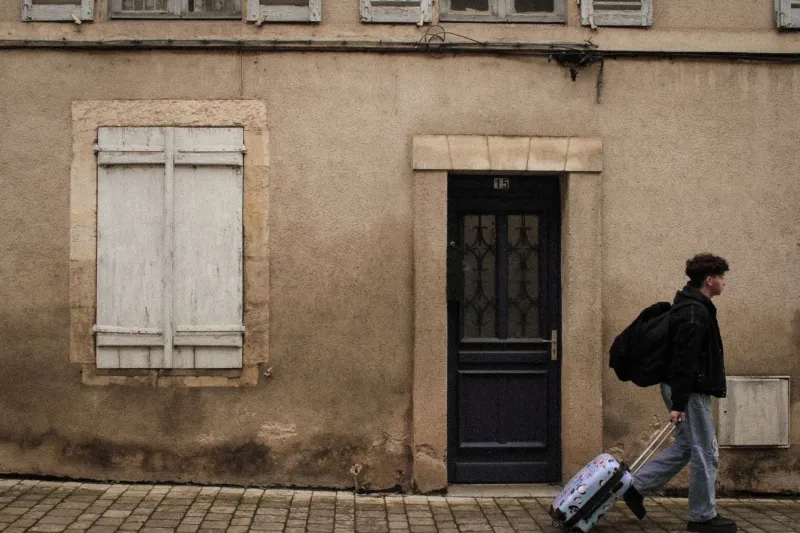
There's a particular kind of panic that sets in around 4 p.m. when you're rolling into a small town you've never visited and your phone shows zero bars and zero hotel reservations. Most travelers would call that a disaster. A growing number of them would call it Thursday.
Spontaneous lodging — the practice of arriving somewhere without a room booked and simply figuring it out — used to be standard travel behavior. Before the internet handed us the ability to lock down a king bed and continental breakfast from our couch six months in advance, people just... showed up. They asked around. They followed hand-lettered signs down gravel driveways. And a lot of them ended up in places that stuck with them for decades.
Something interesting happens when you take that approach today. Because most travelers are booking everything in advance, the places that don't bother with heavy online marketing — the quirky, the family-run, the genuinely weird and wonderful — are often sitting there with a room open, waiting for exactly the kind of person who wanders in off the road and asks.
The Psychology of the Unplanned Room
Booking a hotel room in advance is, at its core, an anxiety-reduction strategy. You eliminate a variable. You know where you're sleeping. That certainty costs something, though — and it's not just the non-refundable rate.
When you pre-book, you're making a decision based on photos, star ratings, and reviews written by strangers whose idea of a good night's sleep may have nothing to do with yours. You're optimizing for a version of a trip you imagined at home, not the one that's actually unfolding around you.
Showing up without a reservation flips that dynamic. Now you're choosing based on what you actually see, what the person at the gas station actually recommends, and what feels right in the moment. That's a fundamentally different kind of decision — one that tends to produce fundamentally different results.
Psychologists who study decision-making have long noted that people derive more satisfaction from choices that feel active and self-directed. When you book a room online, an algorithm made most of the decision for you. When you walk into a B&B because the porch looked inviting, that choice is entirely yours. The room doesn't have to be perfect to feel like a win.
What You Actually Find When You Ask Around
Jenna Calloway, a solo traveler from Asheville, North Carolina, gave up advance hotel bookings about four years ago after a trip through the Texas Hill Country changed her mind permanently.
"I'd had a car breakdown outside of Fredericksburg," she says. "By the time everything got sorted, it was late and I hadn't planned to stay the night. I walked into a diner, explained my situation, and within ten minutes someone was writing down an address on a napkin. It was a woman who rented out a converted carriage house behind her property. No website, no Airbnb listing. Just a key under the mat and a note that said help yourself to the coffee."
The carriage house, she says, was filled with antiques, had a claw-foot tub, and looked out over a peach orchard. "I've stayed in some genuinely nice hotels," she adds. "That carriage house is still the best place I've ever slept."
Stories like Jenna's aren't flukes. They follow a pattern. The traveler is in an unscripted moment. They ask a local — a diner waitress, a hardware store owner, a guy walking a dog — and that local points them somewhere that exists entirely outside the review ecosystem. The place has character because it was never designed to be photographed for a listing. It has warmth because the person running it is doing it because they genuinely like having guests, not because they're chasing a Superhost badge.
The Practical Side of Winging It
Let's be honest: this approach works better in some situations than others. A few things worth knowing before you ditch the booking strategy entirely.
Small towns are your friend. The spontaneous lodging sweet spot is the kind of place with a population under 10,000, a Main Street with an actual diner on it, and at least one person who seems to know everyone. These towns almost always have options that don't show up on Booking.com — rooms above the hardware store, farmhouses that take guests seasonally, retired couples who put a sign in the yard every summer.
Weekends in popular areas are the exception. Leaf-peeping season in Vermont, the weekend of a big state fair, the Fourth of July in a beach town — these are moments when even the hidden gems fill up. The spontaneous approach shines brightest on weekdays and in shoulder seasons when the rooms that exist off the grid actually have vacancy.
Know your asking-around spots. Diners, barbershops, local hardware stores, and small-town visitors' centers (not the big highway ones — the actual local ones) are gold mines. The person behind the counter almost always knows someone who rents a room, or knows a place that doesn't advertise much. This is local knowledge that no algorithm has indexed.
Have a backup plan in your back pocket. This doesn't mean booking something — it just means knowing that if tonight genuinely doesn't work out, the next town over is 20 minutes away and has a motel. The spontaneous approach is most enjoyable when you're not white-knuckling it.
The Room That Comes With a Story
Marcus Tran, who travels solo several times a year for what he calls "decompression trips" through the rural Midwest, has made the no-booking approach a full philosophy.
"I've stayed in a converted grain elevator in Iowa," he says. "A room above a bookshop in a small Missouri town where the owner brought me coffee and we talked for two hours. A hunting cabin in Wisconsin that a guy at a bait shop told me about — he called ahead for me and everything. None of those places had reviews. None of them had Instagram accounts. But every single one of them gave me something to talk about for years."
That's the thing about spontaneous lodging that the five-star review economy can't replicate. The room comes with a story — how you found it, who pointed you there, what was unexpected about it. It becomes part of the trip's texture in a way that a well-reviewed hotel room, however comfortable, rarely does.
There's also something quietly radical about it. In a travel culture that has optimized almost every variable, choosing not to book is a small act of trust — in the road, in strangers, in your own ability to figure things out when you get there.
Most of the time, you get there and it works out fine. Sometimes it works out better than fine. And occasionally, you end up in a carriage house behind a peach orchard in the Texas Hill Country with a claw-foot tub and a key that was left under the mat just for you.
That's not a disaster. That's the whole point.