What Happens When You Actually Say Yes: Travelers Who Accepted a Stranger's Invitation and Never Looked Back
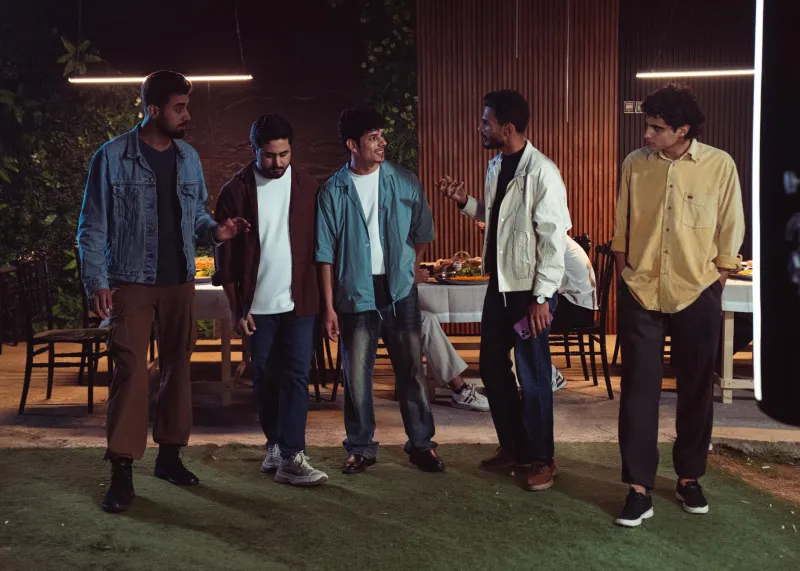
There's a moment every traveler knows. You're somewhere unfamiliar, maybe a little tired, definitely a little off your usual script — and a stranger turns to you and says something like, "You should come with us tonight." Or "We're playing ball in the park if you want in." Or simply, "My family is having dinner. You should eat with us."
And then comes the familiar internal negotiation. Is this safe? Is this weird? What if it's awkward? What if I don't have the right shoes for whatever this turns out to be?
Most of us say no. Or we say maybe in a way that means no. We return to our hotel rooms, our travel apps, our carefully curated itineraries — and we wonder, sometimes for years afterward, what was behind that door we didn't open.
This is a collection of stories from people who opened it.
The Dinner Party in Albuquerque That Rewrote the Trip
Kayla, a graphic designer from Columbus, Ohio, was spending a solo weekend in Albuquerque when she wandered into a small ceramics gallery in the Barelas neighborhood. She struck up a conversation with the artist, a woman named Rosario, who was in the middle of setting up a new display. Twenty minutes later, Rosario mentioned she was hosting a dinner that evening — just neighbors, some family, nothing fancy — and that Kayla was welcome if she didn't have plans.
"I almost said no," Kayla admits. "I had a restaurant reservation. I'd read about it in like four different places online."
She cancelled the reservation.
What followed was a four-hour dinner on a covered patio strung with lights, where she ate green chile stew she still describes as the best thing she's ever tasted, learned the basics of a card game she'd never heard of, and ended up trading contact information with three people she's since visited again. The ceramics artist became a long-distance friend. The restaurant she skipped? She can't even remember its name.
"I've been back to Albuquerque twice since then," Kayla says. "Both times because of people I met at that table."
The Basketball Game That Became a Neighborhood Tour
Travel tip that no app will give you: pickup basketball courts are one of the most effective portals into a city's actual culture. Marcus, a high school teacher from Atlanta, discovered this somewhat accidentally during a trip to Portland, Oregon.
He'd spotted a game happening in a park near his Airbnb and stopped to watch. Someone on the sideline asked if he played. He did. He was invited in.
Two hours later, he was sweaty, slightly winded, and being walked through a neighborhood by three guys who grew up there — pointed toward a taco cart that didn't have a sign, a barbershop with a mural inside that wasn't visible from the street, and a record store that kept its best stuff in the back room for regulars.
"None of that was on any list," Marcus says. "Not even close. That whole afternoon felt like somebody handed me a cheat code for the city."
He's now applied the same approach in Denver, Nashville, and Detroit. The results, he says, are reliably excellent.
Navigating the Yes: How Travelers Decide What's Safe
Let's be honest about the thing everyone's thinking: safety matters. Saying yes to strangers requires judgment, not recklessness. The travelers in these stories weren't throwing caution out entirely — they were recalibrating it.
A few patterns emerge from people who do this well.
Public settings lower the stakes considerably. An invitation to a park, a festival, a restaurant, or a community event carries a different risk profile than an invitation somewhere isolated. Most of the best spontaneous experiences happen in places where other people are already present.
Groups feel different than individuals. Being invited to join a family gathering, a neighborhood crew, or an existing group of friends is a different dynamic than a one-on-one situation with someone you just met. Most experienced spontaneous travelers say group invitations are where they feel most comfortable saying yes.
Telling someone where you're going is non-negotiable. Text a friend. Drop a pin. Send a quick message that says "Going to dinner with some locals I met, here's the address." Takes thirty seconds. Makes everything feel more manageable.
Trust your gut, but check your assumptions. Sometimes hesitation is genuine intuition. But sometimes it's just unfamiliarity — a neighborhood that looks different from where you grew up, a cultural context you don't immediately recognize. Learning to tell the difference is part of becoming a better traveler.
The Road Trip That Wasn't on Anyone's Itinerary
Amanda and her college roommate were finishing up a week in Savannah, Georgia, when they met a couple at a rooftop bar who were driving to the Florida panhandle the next morning and had two empty seats. The invitation was casual, almost offhand.
"They said, 'We're going to this little town on the Gulf, you'd love it, come if you want,'" Amanda recalls. "We had flights home in two days. We changed them."
The town — a small, unhurried place that Amanda describes as "the anti-Destin" — had no major attractions, no Instagram-famous anything. What it had was a fish shack that had been run by the same family for decades, a sandbar accessible only by kayak, and a sunset Amanda says she's tried to describe to people without success.
"You can't really explain it," she says. "You kind of had to earn it by making a weird decision with strangers."
She and her roommate have stayed in touch with the couple. They're planning another trip together — this time with actual advance notice.
The Skill You're Not Practicing
Here's what the best spontaneous travelers seem to understand: saying yes to unexpected invitations is a skill, and like most skills, it gets easier the more you use it.
The first time feels genuinely nerve-wracking. The second time, a little less so. By the time you've done it a handful of times and accumulated a roster of unexpectedly great memories, the calculus shifts. The question stops being "Should I say yes?" and becomes *"What's the best version of yes here?"
It also changes how you travel in more subtle ways. You start making eye contact more. You linger at bars and market stalls instead of checking your phone. You let conversations run longer than they need to, because you've learned that something interesting sometimes lives just past the point where you'd normally wrap things up.
None of this shows up in a guidebook. No algorithm recommends it. It's the part of travel that only happens when you wander slightly off the edge of your own comfort zone and find out what's there.
Something wonderful, more often than you'd expect.