You Missed Your Exit. Congratulations — You're About to Have the Best Day of the Trip.
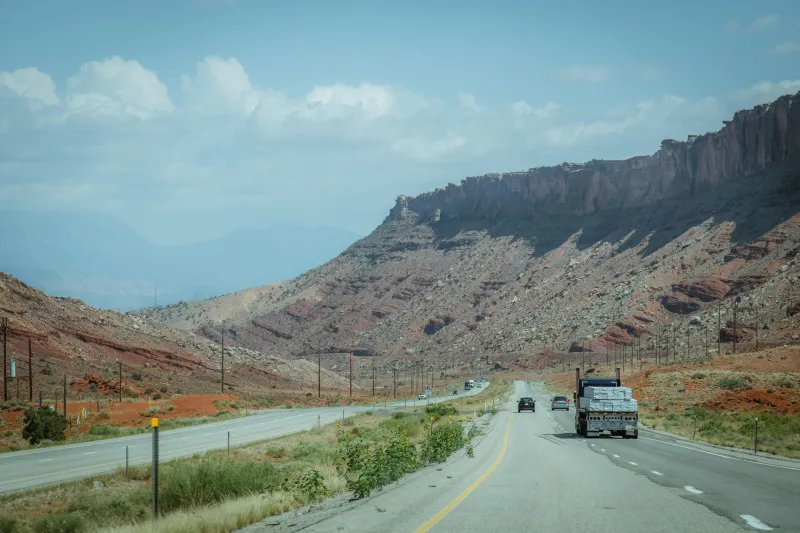
It starts with a small, sinking feeling. The sign you needed just blurred past your window, the exit ramp is already behind you, and now you're somewhere slightly off the edge of your carefully color-coded itinerary. Most of us reach for the phone immediately, fingers already tapping for the fastest route back to the plan.
But what if you didn't?
What if the missed exit wasn't a mistake — it was an invitation?
The Moment Before You Hit Reroute
There's a very specific window of opportunity that opens when you drift off course. It lasts maybe thirty seconds. In that window, you have a genuine choice: snap back to the script, or let the road take you somewhere new.
Travel writer and road tripper Dani Kowalski describes this moment as "the fork that doesn't look like a fork." She was driving through rural Tennessee last spring, heading toward a well-reviewed distillery she'd bookmarked months earlier, when she blew past her turn on a two-lane highway outside Cookeville. "I saw a hand-painted sign for a peach orchard and just... kept going," she says. "Two miles later I was eating a peach over a paper bag with a 74-year-old woman named Ruthie who'd been growing fruit on that land since 1979. That distillery was fine. Ruthie was unforgettable."
This isn't a rare story. Talk to experienced road trippers long enough and you'll find that their most-told travel memories almost always involve some version of the accidental detour.
Why We're Wired to Rush Past the Good Stuff
Here's the uncomfortable truth: most of us travel like we're trying to check boxes rather than collect experiences. We build itineraries that would make a logistics coordinator proud — tight timings, confirmed reservations, color-coded maps — and then we treat any deviation from that plan as a small personal failure.
Psychologists call this "completion bias," the deeply human urge to finish what we started, even when finishing isn't actually the point. On vacation, completion bias looks like racing through a national park to hit all seven viewpoints instead of spending three hours at one. It looks like power-walking through a farmers market to "get to" the restaurant you Yelped two months ago. It looks like hitting reroute before you've even looked up from your phone.
The irony is that travel — real, soul-filling travel — is almost entirely about the unexpected. The experiences that stay with us aren't usually the ones we planned. They're the ones that snuck up on us.
Real Detours, Real Discoveries
Marco Trevino was driving the Pacific Coast Highway with his college roommate when they missed a turnoff near Cambria, California, and ended up on a narrow back road that wound into the hills above the coast. What they found: a tiny roadside stand run by a local farmer selling elephant garlic, a jaw-dropping view of the ocean through a grove of eucalyptus trees, and eventually a conversation with a retired marine biologist who pointed them toward a tide pool beach that doesn't appear in any guidebook they'd ever seen.
"We were annoyed for about four minutes," Marco says. "Then we were grateful for the rest of the trip."
Or take Priya Anand, who missed her exit off I-70 heading into Kansas City and ended up rolling through a neighborhood called Strawberry Hill — a historic Croatian community she'd never heard of. She stopped when she spotted a hand-lettered sign for homemade potica in a bakery window. She didn't know what potica was. (It's a Central European walnut roll pastry, and it's extraordinary.) She ended up spending two hours in that bakery, learning about a slice of immigrant history in the American Midwest that her original itinerary would have completely bypassed.
"I was supposed to be at the hotel by 3," she laughs. "I got there at 6. It was the best decision I made all week."
Building the Detour Into the Trip Before You Even Leave Home
Here's the practical part, because we know not everyone can just throw the map out the window and hope for the best.
The good news is you don't have to. You just have to build in what travel planners sometimes call "white space" — unscheduled time that you protect like a reservation. Think of it as a standing appointment with serendipity.
Give yourself a buffer on driving days. If Google Maps says the drive is three hours, tell yourself it's four. That extra hour isn't wasted — it's the hour that's available for detours.
Make a loose "curiosity list" instead of an itinerary. Instead of booking every meal and locking every activity, jot down things you're vaguely curious about in the region. Roadside attractions. Small towns you've never heard of. A type of food you want to try. These become your detour anchors when you inevitably drift off course.
Adopt a "one unplanned stop per day" rule. This is a low-pressure commitment that gives your brain permission to say yes when something catches your eye. One unexpected stop. That's all. You'd be amazed what one stop can turn into.
Let the locals redirect you. When you end up somewhere unplanned, ask someone who lives there what's worth seeing nearby. Not TripAdvisor. Not a travel blog. A person. This is almost always where the real recommendations live.
The Permission Slip You've Been Waiting For
If you're a planner — and there's nothing wrong with being a planner — the accidental detour can feel deeply uncomfortable at first. There's a whole mental negotiation that happens: the reservation you might miss, the time you'll lose, the plan you're abandoning.
But here's the reframe: you're not abandoning the plan. You're upgrading it with real-time information that no app could have given you. The best version of any trip is the one that stays flexible enough to let something wonderful happen.
Dani Kowalski puts it simply: "The GPS will always get you back on track. That's its whole job. Your only job is to decide whether you want to go back."
So the next time you blow past your exit — and you will, eventually — take a breath before you hit reroute. Look at the road ahead. See what's down there.
The plan will wait. The peach orchard might not.