Skip the Flight: The Hidden Gem in the State Next Door Might Be the Best Trip You've Never Taken
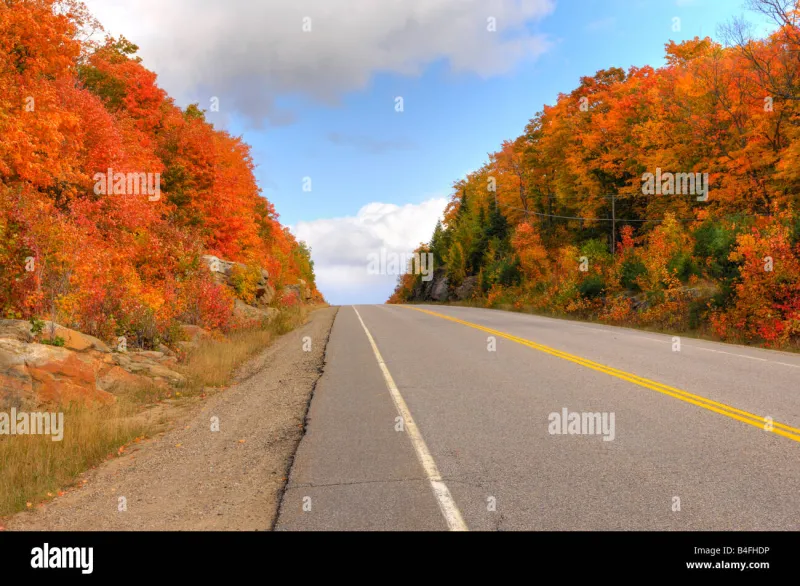
Photo: scenic rural American small town main street autumn road trip discovery, via c8.alamy.com
The Bucket List Trap
Somewhere along the way, travel got competitive. Instagram didn't help. Neither did those listicles ranking the "50 Places You Must See Before You Die" — a genre that somehow always includes the Amalfi Coast but never Custer State Park in South Dakota, where bison still roam in herds so large they stop traffic on the highway.
Here's an uncomfortable truth: a significant chunk of Americans have never visited the state directly next to theirs with any real intention of exploring it. They drive through. They stop for gas. But they don't go.
Meanwhile, they've got a half-planned trip to Santorini saved in their browser tabs that they've been "almost booking" for three years.
This isn't a knock on international travel — the world is extraordinary and worth exploring. But there's a real case to be made that the pressure of the dream destination often overshadows the quiet magic of somewhere unexpected and close. And close, in a country this size, can still mean genuinely wild, genuinely foreign-feeling, and genuinely wonderful.
What "Overlooked" Actually Looks Like in the US
Let's run through a few examples, because the breadth here is the whole argument.
Natchez, Mississippi is one of the oldest cities on the Mississippi River, packed with antebellum architecture, extraordinary food culture, and a music heritage that predates the blues. Most people outside the South couldn't find it on a map. Visitors who make it there consistently describe it as one of the most atmospheric places in America.
Leavenworth, Washington is a Bavarian-style village tucked into the Cascade Mountains that looks like someone lifted a Bavarian village and set it down in the Pacific Northwest. Surrounding it: world-class hiking, apple orchards, and a wine region most people don't know exists. It's a six-hour drive from Portland. It feels like another country.
The Loess Hills of Iowa — a rare geological formation found in only two places on Earth (Iowa and China) — runs along the western edge of the state. Rolling, dramatic, covered in native prairie grasses and wildflowers. Almost no one visits. Almost no one knows it exists.
Apalachicola, Florida sits on the Gulf Coast far west of the tourist corridor, a sleepy fishing town with the best oysters in the country and zero chain restaurants. It looks like coastal Florida used to look before the condos arrived.
These places aren't hidden because they're not good. They're hidden because no one is paying the algorithm to promote them.
The Numbers Are Kind of Startling
According to data from the US Travel Association, domestic tourism accounts for the vast majority of all American travel spending — but that spending is heavily concentrated in a small number of well-known destinations. The top 25 US cities absorb a disproportionate share of domestic visitors, leaving enormous swaths of the country essentially unexplored by tourists.
At the same time, surveys consistently show that travelers who visit less-famous domestic destinations report higher satisfaction scores than those visiting major tourist hubs. Less crowding, more authentic interaction with locals, lower costs, and the specific pleasure of feeling like you've discovered something — these things add up.
There's also the practical math. A flight to Europe costs real money. Hotels in Paris cost real money. The exchange rate costs real money. A road trip to a neighboring state costs gas, a modest motel or Airbnb, and food — often remarkably good food at remarkably reasonable prices in places that haven't been priced for international tourists.
The "Exotic Nearby" Phenomenon
There's a specific feeling that comes from discovering something extraordinary close to home. It's different from the awe of seeing something famous — it's more personal, more surprising, almost slightly disorienting.
A family from suburban Ohio who drives three hours to the Hocking Hills region and stands in front of a 100-foot waterfall hidden inside a gorge doesn't experience that as a consolation prize. They experience it as a genuine discovery. Because it is.
This is the "exotic nearby" effect — the way something unfamiliar and beautiful hits differently when it's not where you expected it to be. The US is enormous and geographically diverse enough that almost every state contains at least one landscape or experience that would feel completely foreign to someone from a different region.
A Floridian visiting Vermont in October for peak foliage season isn't having a lesser experience because they didn't go to Japan for cherry blossoms. They're having a different experience — one that's entirely their own, with none of the choreography of a famous destination.
A Loose Tour of the Underrated, State by State
A full 50-state breakdown would take a book, but here's a taste of the kind of places that reward the curious traveler willing to look sideways:
- Alabama: The Cahaba River, home to more species of fish than any other river of its size in North America, runs through a landscape most people associate with nothing in particular.
- Nebraska: Chimney Rock and Scotts Bluff — genuine frontier landmarks on the Oregon Trail — sit in a high-plains landscape that feels cinematic and completely uncrowded.
- Rhode Island: The whole state is underrated, but Block Island specifically — a short ferry ride off the coast — has cliffs, ponds, and beaches that rival anything in New England.
- New Mexico: Everyone knows Santa Fe. Almost no one makes it to Silver City, a former mining town turned arts community with extraordinary food and access to the Gila Wilderness, the country's first designated wilderness area.
- Michigan: The Upper Peninsula is its own world entirely — waterfalls, Lake Superior coastline, old-growth forest, and a pasty-eating culture imported from Cornish miners that is absolutely worth investigating.
How to Actually Plan a Neighbor-State Trip
The beautiful thing about domestic close-to-home travel is that the planning bar is lower, which means you can lean harder into spontaneity.
Pick a state you've driven through but never really explored. Do a single afternoon of loose research — not a full itinerary, just enough to identify two or three anchor points. A town that sounds interesting. A natural feature you've never seen. A food or cultural tradition specific to that region.
Then go. Drive the back roads. Ask people where they'd send a curious visitor. Give yourself enough slack in the schedule to follow a good tip down a road you didn't plan to take.
The famous destinations will still be there. The Eiffel Tower isn't going anywhere. But the fishing village with the hand-painted welcome sign and the best clam chowder you've ever tasted — that one exists on its own timeline. And the fact that it's three states over instead of three time zones away doesn't make it any less worth the trip.
Sometimes the most serendipitous discovery is realizing the wonderful thing was close all along.