Alone and Wide Awake: What Solo Travel Does to Your Brain (and Why It's Magic)
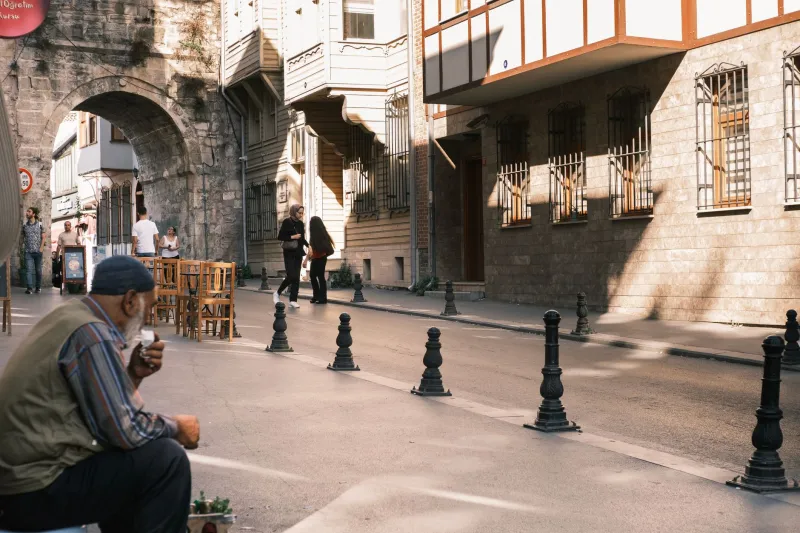
There's a moment most solo travelers can pinpoint — usually somewhere between the first solo dinner and the second solo morning — when something shifts. The noise in your head quiets down. Your eyes start catching things. A hand-lettered sign above a doorway you'd have walked past in conversation. The smell of something frying two blocks over that turns out to be the best thing you eat all week. A stranger's half-finished sentence drifting across a café that sends you somewhere entirely unplanned.
This isn't coincidence. It's not even luck, exactly. It's what happens when your brain finally has room to pay attention.
The Coordination Tax Nobody Talks About
Travel with other people is wonderful for about a hundred reasons. But it comes with a hidden cost that rarely gets named: the coordination tax.
When you're moving through a new place with even one other person, a significant portion of your cognitive bandwidth is quietly dedicated to managing that relationship. Where do we eat? Is she tired? He wants to see the museum; I want to wander the market. Should we split up? Are we having fun? That low-level social negotiation runs constantly in the background, and it pulls focus away from the environment you're actually standing in.
Solo travel eliminates that entirely. There's nobody to check in with. No consensus to build. No pace to match. Your attention, freed from the work of group dynamics, has nowhere to go except outward — toward the street, the light, the unexpected alley, the woman selling something from a cooler that you've never seen before and absolutely have to try.
Neuroscientists who study attention describe something called "attentional capture" — the way novel stimuli grab focus when we're not already directing it somewhere else. Solo travelers, unburdened by social coordination, are far more susceptible to attentional capture in the best possible way. The weird and the wonderful get through.
You Stop Performing and Start Perceiving
Here's something a little uncomfortable that seasoned solo travelers will recognize: group travel involves a certain amount of performance. You're narrating your experience to the people around you, editing it slightly for their benefit, sharing reactions in real time. That's not a flaw — it's just human. But it does mean you're partly living the experience and partly translating it simultaneously.
Alex Merritt, a freelance photographer from Portland who has spent the better part of a decade traveling alone through places like rural Appalachia, the Texas Gulf Coast, and the small towns of the Ozarks, puts it plainly: "When I'm with other people, I'm always half in the moment and half explaining the moment. Alone, I'm just in it. And that's when I actually see things."
That shift — from narrator to witness — changes what you notice and what you're willing to follow. You don't need to justify turning down a street because it looked interesting. You don't need to explain why you stopped for twenty minutes to watch a man repair a screen door on a porch in a town you'd never heard of. You just do it. And more often than not, it leads somewhere.
The Serendipity Equation
Serendipity gets treated like pure chance, but it's not. It's a product of availability — being available to notice, available to respond, available to say yes without running it by anyone else first.
Solo travelers are structurally more available. When a local at a diner counter tells you there's a bluegrass festival happening twenty miles north that isn't on any app, a solo traveler can just go. When a bookshop owner mentions that the town two exits back has a weekend flea market that locals have been running for forty years, a solo traveler can U-turn without a committee vote.
Jamila Osei, a nurse from Atlanta who started taking solo long-weekend trips after a particularly brutal stretch at work, describes it as "the yes reflex." "Traveling with my friends, I love them, but we spend so much time deciding," she says. "Alone, I just say yes. Someone suggests something, I go. And almost every time, that's the thing I end up talking about for years."
That yes reflex isn't recklessness. It's responsiveness — the ability to treat an unexpected invitation as data rather than a disruption to the plan.
Alone Doesn't Mean Lonely
The assumption most people make about solo travel — that it's inherently isolating — gets disproved pretty quickly on the road. In fact, the opposite tends to be true.
Groups are socially self-contained. They arrive at a restaurant already mid-conversation, leave the same way, and rarely create an opening for an outside voice to enter. Solo travelers are porous. They make eye contact. They get asked questions. They end up in conversations that go places nobody planned.
Mike Callahan, a retired high school teacher from Ohio who started solo road-tripping at 62, says strangers talk to him constantly now in ways they never did when he traveled with his wife. "I'm not unapproachable anymore," he says, laughing. "People see a guy eating alone and they check in. And then we're talking for two hours about the town's history, and they're writing down three places I have to go before I leave."
That's the paradox of solo travel: removing your built-in social network makes you dramatically more likely to build a temporary one with the people actually around you.
How to Lean Into It
If you've never traveled solo — or if you have but spent most of it with your eyes on your phone filling the social void — there are a few things worth trying deliberately.
Eat at the bar or counter whenever possible. This is the single highest-yield move in solo travel. The bar is where conversations happen, where recommendations get made, where the unexpected evening begins.
Give yourself one completely unscheduled half-day per trip. No destination, no plan. Just move toward whatever feels interesting and see where it goes. The discomfort fades fast.
Leave your earbuds out more than feels natural. The ambient sound of a place is information. You'll hear things — conversations, music, someone calling to someone else — that redirect you somewhere better.
Say what you're looking for. Tell your server, your innkeeper, the person next to you at the farmers market that you're passing through and want to know what they'd actually show someone. People love this question and they answer it honestly.
The Thing You Bring Home
Solo travelers often say the same thing when they come back: they feel more like themselves. Not just relaxed — recalibrated. Like they remembered how to pay attention.
That's not a small thing. In ordinary life, attention is constantly fractured — notifications, obligations, other people's needs. Travel is an opportunity to reassemble it. And solo travel, specifically, creates the conditions where that reassembly actually happens.
You stop coordinating and start noticing. You stop performing and start perceiving. You stop filtering the world through someone else's preferences and start following your own curiosity wherever it leads.
And more often than not, it leads somewhere wonderful — somewhere you never would have found on a guided tour, on a group trip, or on any map that existed before you got there.