Hungry and Directionless: Why the Best Meal of Your Trip Is the One You Stumble Into
Here's a scenario that probably sounds familiar. You've just spent forty-five minutes scrolling through reviews, cross-referencing two different apps, reading comment threads about whether a restaurant's quality has dipped since the owner's cousin took over the kitchen — and now you're standing on a sidewalk, more confused than when you started, and significantly hungrier.
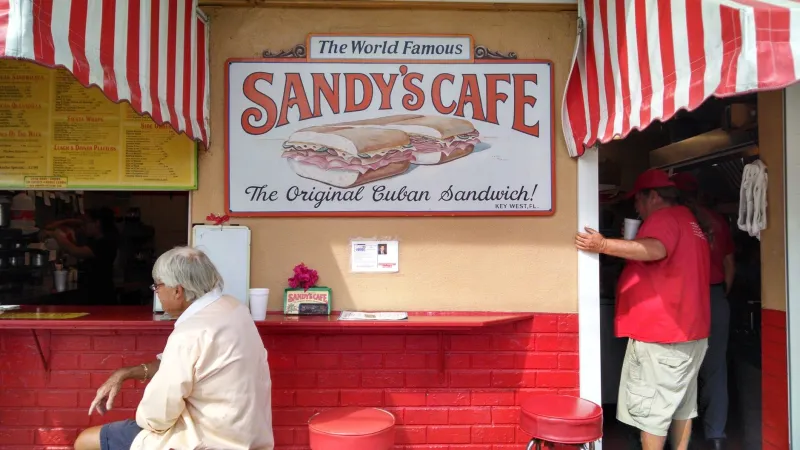
Now here's the alternative. You close your phone, start walking, and somewhere around the third block you catch a smell. Woodsmoke and garlic, maybe. Or something sweet and yeasty drifting out of a screen door. You slow down. You look up. There's a place with no sign you recognize, a hand-painted menu board, and every single table occupied by people who are not looking at their phones because they are too busy eating.
That's the one. That's always the one.
Why the Algorithm Can't Smell What You Can
Review platforms are genuinely useful for a lot of things. Finding a reliable pharmacy, figuring out if a museum is worth the admission price, checking whether a hotel has parking — all great. But food discovery? That's where the algorithm quietly falls apart.
The problem is that great local restaurants don't always have a digital footprint. Family-run spots that have been feeding the same neighborhood for thirty years may have exactly eleven reviews, two of which are from the owner's nephew. The taqueria operating out of a converted gas station on the edge of a small Texas town isn't going to show up in your curated feed. The Vietnamese sandwich counter tucked into the back of a grocery store in a mid-sized Georgia city isn't optimized for search.
These places exist in abundance across America. They thrive entirely on word of mouth, foot traffic, and the simple fact that the food is extraordinary. And the only way you find them is by being present — physically, sensorially, attentively — in the neighborhood where they live.
The Sensory Checklist That Actually Works
When you're wandering hungry through an unfamiliar neighborhood, your body is running a surprisingly sophisticated evaluation process. Here's how to consciously tune into it.
Follow smoke before you follow signage. Wood smoke, charcoal, the low haze of a grill that's been running since morning — these are markers of commitment. Nobody fires up a real smoker for a mediocre product. If you smell it, walk toward it.
Listen for a busy kitchen. The clatter of pans, the rhythm of a line moving fast, voices calling out orders — a restaurant kitchen making noise is a restaurant kitchen doing real work. Silence in the back usually means slow business, which is rarely a great sign.
Count the locals, not the tourists. This one sounds obvious but it's worth repeating. If you're in a neighborhood that isn't a major tourist corridor and the dining room is full of people who look like they live there, that's your strongest possible signal. Locals have options. They're choosing this place for a reason.
Look for the handwritten anything. A handwritten daily special on a chalkboard, a laminated menu that's been edited with a marker, a price list taped to the window — these are signs of a place that changes based on what's fresh, what's in season, what the cook felt like making today. That's not sloppiness. That's a kitchen paying attention.
Notice who's eating alone. Solo diners at lunch, especially regulars who greet the staff by name, are among the most reliable indicators of quality. These are people who have made a deliberate choice, on an ordinary Tuesday, to eat here. They're not celebrating anything. They just like the food that much.
Real Finds From Real Wanderers
A traveler passing through Albuquerque on a road trip pulled off the main drag looking for gas and ended up at a strip mall with a small New Mexican restaurant where the red chile was made fresh every morning. She'd never heard of it, had no reason to stop there, and still talks about those enchiladas three years later.
A couple exploring the back streets of Charleston, South Carolina, took a wrong turn trying to find a park and smelled something frying. They followed it to a counter-service spot operating out of what looked like someone's converted porch, where the fried fish was served in a paper basket with hot sauce and white bread. No Yelp page. No Instagram presence. Just a line of people from the neighborhood who knew.
A solo traveler in Chicago's Pilsen neighborhood ducked into a bakery to get out of the rain and discovered a family making pan dulce the same way they had in Michoacán three generations ago. She bought a bag, sat on a wet bench outside, and ate every single piece.
None of these places were findable through a search. All of them were findable through curiosity.
How to Set Yourself Up for the Stumble
Serendipity sounds passive, but there's actually a light skill involved in creating the right conditions for it.
Eat on neighborhood time, not tourist time. Skip the early dinner. Go when locals eat — which in most American cities means somewhere between 6:30 and 8:00 PM on weekdays, or the midday rush on weekends. You'll find the places running at full capacity, which is exactly when you want to evaluate them.
Walk before you're desperate. Give yourself a hunger window — curious and interested, not frantic. When you're starving, you'll grab the first thing you see. When you're just starting to think about food, you'll actually look around.
Pick a neighborhood, not a restaurant. Instead of searching for a specific place, search for a type of neighborhood. Older commercial strips, immigrant communities, working-class main streets — these are where the unreviewable gems tend to cluster. Pick the zip code, then wander.
Ask anyone but a concierge. Hotel staff are wonderful for many things, but their restaurant recommendations are often filtered through familiarity and liability. Ask the person at the laundromat, the woman walking her dog, the guy sitting outside the barbershop. Ask where they go. Then go there.
The Meal That Doesn't Exist on the Internet
There's something almost sacred about a meal that no algorithm sent you to. You can't screenshot your way to it, you can't bookmark it in advance, you can't share the link. You can only describe it to people afterward, and even then, something gets lost in translation.
That's kind of the point.
The best food discoveries are yours in a way that a curated recommendation never quite can be. You earned them with your feet and your nose and your willingness to walk into a room where you didn't know a single person. And the restaurant earned your loyalty not by gaming a review platform, but by making something real and putting it in front of you.
Close the app. Walk around the block. See what you find.
It's almost always better than what you were looking for.