Park Like a Local: The Pickup Truck Method for Finding Places That Don't Want to Be Found
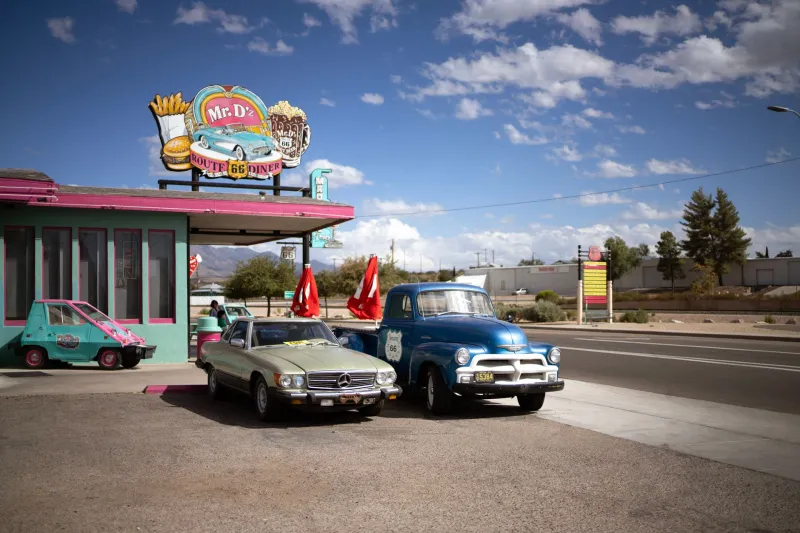
Here's a field observation that has held up across thousands of miles of American back roads: the best breakfast in any rural county is almost always served in a building with no sign visible from the highway, a gravel lot, and more pickup trucks than parking spaces. You will not find it on Yelp. It may not have a website. It exists entirely on the strength of reputation passed between people who already know where it is.
The question is how you, a stranger with out-of-state plates, find your way there.
The answer is simpler than you'd expect: you watch where people park.
Why Parking Lots Are the Honest Version of the Internet
Online review platforms are useful, but they measure a specific kind of experience — the kind people feel motivated to document and share. That tends to skew toward places that are already visible to travelers, already optimized for a certain kind of audience, already in some way performing for the outside world.
The parking lot doesn't lie in any of those ways. A gravel lot full of mud-caked work trucks at 6:30 AM means real people with real schedules chose this place over every other option on their way to a job. They're not here for the ambiance. They're here because the food is right and the coffee is hot and the owner knows their name. That's a stronger endorsement than four and a half stars from people who were passing through.
Local behavior patterns — where people park, how full a lot is at what time of day, what kinds of vehicles are there — carry information that no algorithm has figured out how to capture. Reading those patterns is a skill, and like most skills, it gets better with practice.
The Basic Observation Framework
You don't need to be a trained anthropologist to do this. You need to slow down and look.
Time of day matters. A restaurant lot that's full at noon on a weekday is drawing people on lunch breaks. Those are locals with limited time who've made a deliberate choice. A lot that fills up at 7 PM on a Friday tells a different story — it might be a community gathering place, a spot where people celebrate, somewhere with history in the town. Both are worth your attention, but they're different experiences.
Vehicle type matters. Work trucks, farm equipment, beat-up sedans with local bumper stickers — these are the vehicles of people who live there. Rental cars and clean SUVs with roof boxes are yours and mine. The ratio tells you a lot about who a place is actually for.
Foot traffic patterns matter. If you're walking through a small downtown and notice that people keep emerging from one particular door carrying coffee cups or paper bags, that door is worth opening. Locals vote with their feet, and they vote consistently.
Real Navigations, Real Discoveries
Rachel, a landscape architect from Austin who takes solo road trips through the rural South every fall, has refined the pickup truck method into something close to an art form. "I give myself a rule: if I see a lot with more than six work trucks and nothing else, I have to stop," she said. "I've never been disappointed by that rule."
Her most memorable find came from a cinder-block building outside a small Alabama town with a hand-painted sign she couldn't read from the road. The lot had eight trucks and a school bus. Inside was a family-owned soul food operation that had been feeding the county for over thirty years. "There was no menu on the wall. You just told them how hungry you were and they brought you food," she described. "I found out later it had been featured in a regional magazine once, but the owner didn't pursue any of it. She didn't want the attention. The regulars were enough."
That's the thing about places discovered through local behavior patterns: they often aren't hiding from you on purpose. They're just not trying to be found by you. The distinction matters.
Beyond Restaurants: Events, Hangouts, and Gatherings
The parking lot method extends well beyond food. It works for events that aren't advertised to outsiders, community spaces that don't appear on any tourism map, and gathering spots that exist purely because locals decided they were good.
A field with fifty trucks parked along a fence line on a Saturday afternoon in rural Texas is almost certainly a rodeo, a tailgate, or some kind of competition. A church parking lot full of cars on a Wednesday evening might be a community dinner open to anyone who shows up. A hardware store lot that doubles as an informal morning social hour — and you'll find these everywhere in small-town America — is a masterclass in local information exchange if you're willing to get out of your car and stand near the coffee.
Paul, a retired postal worker from Ohio who has spent the last decade slowly driving every state he missed while working, describes stumbling onto a weekly car show in a small Indiana town simply because he noticed an unusual concentration of vehicles near a drive-in that should have been closed for the season. "There were maybe forty cars, all backed in so you could see the engines. Just guys hanging out on a Thursday night. Nobody advertised it anywhere. It just happened every week because it had always happened every week." He spent three hours there. He's been back twice.
The Phone-Down Principle
There's a practical tension here worth naming. The instinct when arriving somewhere unfamiliar is to reach for the phone and run a search. That instinct isn't wrong — it's just incomplete. The search returns what's been indexed. The parking lot returns what's actually happening.
Try this on your next road trip: before you open any app to find a place to eat, spend five minutes driving slowly through town and looking at lots. Notice what's full. Notice the vehicles. Notice the patterns. Then make your choice based on what you see rather than what an algorithm suggests.
You will occasionally end up somewhere underwhelming. That's fine. The hit rate, in my experience, is significantly higher than random app browsing — and the discoveries feel genuinely earned in a way that a top-ten list never quite delivers.
The best places in any town aren't hiding. They're just waiting for someone to look up from their screen long enough to notice the trucks.