Wrecked and Wide Open: The Strange Magic of Decisions Made After Midnight
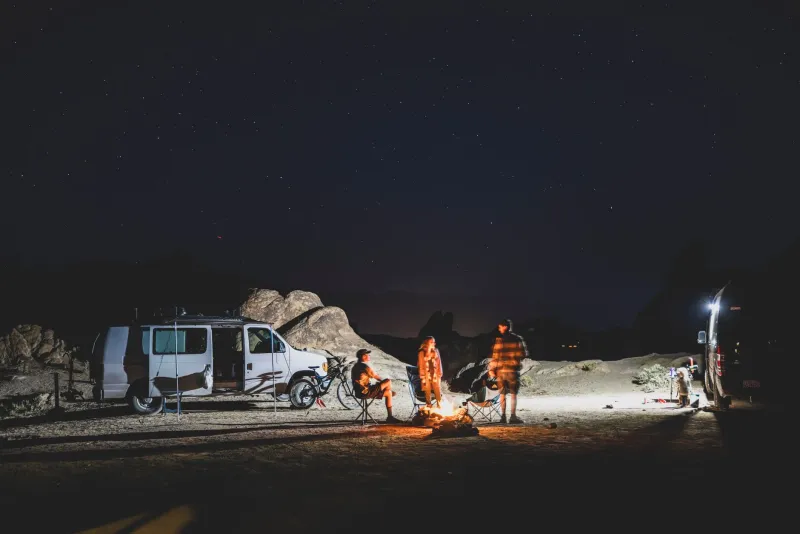
At some point during a long trip, your inner travel critic goes quiet. Not because the trip got better — though it often does — but because you're simply too exhausted to maintain the mental overhead of constant evaluation. The spreadsheet in your head stops updating. The pros-and-cons loop breaks. And in that gap, something genuinely interesting tends to walk in.
It sounds like a bug. It's actually a feature.
Why Your Tired Brain Is a Better Traveler
Psychologists who study decision-making have long noted that mental fatigue doesn't just slow us down — it changes what we prioritize. When our prefrontal cortex is running low on resources, we stop optimizing for safety and efficiency and start operating more on instinct and immediate social cues. In everyday life, this is why you make impulsive purchases at the end of a long workday. On the road, it's why you end up at a stranger's kitchen table at 1 AM eating food you can't identify and having the conversation of your life.
The internal filter that normally screens out anything unfamiliar, risky, or unscheduled gets quieter. What's left is something more like pure presence — responding to what's actually in front of you instead of comparing it against a mental model of what the night was supposed to look like.
This isn't a case for sleep deprivation as a travel strategy. It's more specific than that. It's about recognizing that the hours when your rational planning machinery is offline are often the hours when real serendipity gets a foothold.
The Bonfire You Almost Skipped
Marco, a high school history teacher from Portland who drives a different stretch of rural America every summer, describes a night in the Nebraska Sandhills that turned on exactly this dynamic. He'd been driving since early morning, had already checked into a motel, and was heading back from a late dinner when he saw firelight in a field off the highway.
"Normally I would have kept walking," he said. "I had a plan for the next day. I was tired. I had every reasonable excuse." Instead, he walked toward the light. It was a group of ranchers celebrating a neighbor's retirement, gathered on a property that had been in the same family for four generations. He stayed until almost 3 AM. By the end of the night, one of the ranchers had offered to take him out on horseback at dawn to see a part of the Sandhills that doesn't appear on any tourism map.
"I've thought about that night a hundred times," he told me. "If I hadn't been so tired that I stopped overthinking it, I would have walked past a bonfire and gone to sleep. And I never would have known what I missed."
The Decision That Rewrites the Itinerary
There's a specific category of late-night travel choice that deserves its own recognition: the decision to stay. Not to extend a hotel booking or add a day to an itinerary in any organized sense, but the 2 AM realization that you're not done with a place yet — and the choice, made from exhaustion rather than calculation, to just... not leave.
Dana, a graphic designer from Chicago, describes a version of this that happened in Marfa, Texas. She'd planned two nights. On the second night, she ended up in a long conversation at a bar with a group of artists who had relocated there from various cities, each with a story about why they'd stayed. She'd already packed her bag. Her checkout was at 11 AM.
"Around midnight I just thought, I'm not going," she said. "I didn't weigh it out. I was too tired to do the math on whether it made sense. I just knew I wasn't ready to leave." She called the front desk in the morning, extended by three days, and ended up visiting two studios and attending an art opening she'd never have found in a guidebook. "The version of me that was fully rested and on schedule would have driven away," she said. "The version of me that was too tired to argue with herself stayed."
What the Late-Night Invitation Actually Is
Travelers who've spent time collecting these kinds of stories tend to notice a pattern: the late-night moment of openness is almost always preceded by an invitation that the daytime version of themselves would have deflected. Someone says "you should come with us" or "we're heading to this thing, want to join?" and the exhausted traveler, lacking the energy to construct a polite excuse, just says yes.
The invitation itself isn't unusual. What's unusual is the acceptance. And the acceptance happens because the tired brain has stopped running the risk-assessment routine that normally produces a graceful exit.
This is worth sitting with for a moment. How many invitations do we deflect, not because we genuinely don't want to go, but because we have just enough mental bandwidth left to manufacture a reason not to? Fatigue removes that bandwidth. It leaves you with the raw impulse, which — at least in travel contexts — often points somewhere good.
A Case for Letting the Night Run Long
None of this means you should deprive yourself of sleep as some kind of travel hack. Rest matters, and a genuinely exhausted traveler can also make genuinely bad decisions. The point is narrower: there's a window, usually somewhere between midnight and 3 AM on a long travel day, when the internal editor steps out and the traveler underneath gets to operate without supervision for a while.
Pay attention to what that traveler wants to do. They're often onto something.
The best travel stories rarely start with "I had this on my itinerary." They start with "I was so tired I just said yes." There's a reason for that. Your wrecked, wide-open, filter-free self has been waiting for permission to wander. Sometimes all it takes is a long day and a light in the dark to let it.