Empty Trails, Full Stories: Why Off-Season Solo Travel Is the Serendipity Hack Nobody Talks About
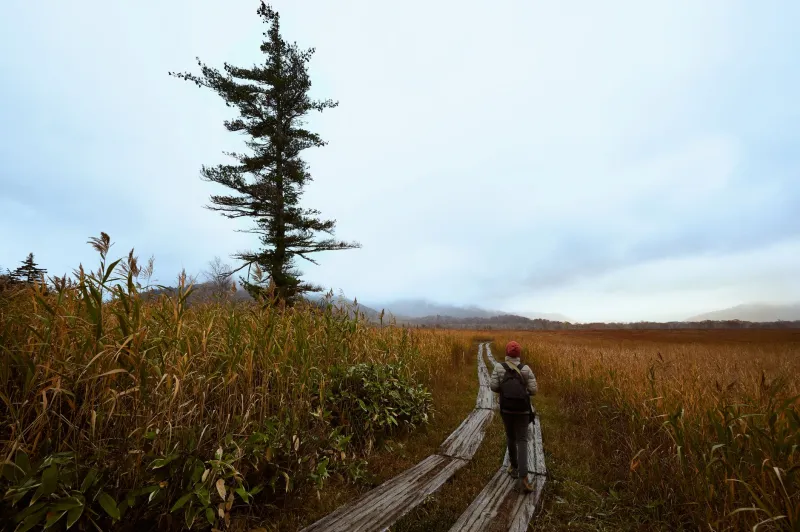
The Moment the Crowd Disappears
Picture Sedona, Arizona in the third week of January. The famous red rocks are still there, impossibly orange against a pale winter sky. The vortex sites are still marked on every map. But the parking lots? Half empty. The trailheads? Quiet enough to hear your own footsteps. And the woman running the small crystal shop on the edge of town? She has nowhere to be, no line of tourists behind you, and a story about the canyon she's been hiking for thirty years that she's genuinely excited to share.
This is the serendipity sweet spot — and solo off-season travelers stumble into it constantly.
It's not a coincidence. There's a specific set of conditions that make unexpected, meaningful travel moments possible, and traveling alone during the slower months checks almost every box on that list.
Why Fewer People Actually Means More Experience
Here's the counterintuitive thing about popular destinations: the more people there are, the less you actually experience the place. You're experiencing the crowd's version of the place. You're following the path of least resistance through a site designed to funnel thousands of visitors efficiently from one photo opportunity to the next.
When you show up in October instead of July, or February instead of spring break, the infrastructure relaxes. Staff at museums and parks have time to wander off-script. Shop owners lean in doorways and chat. The bartender at the local spot on a slow Tuesday has opinions about where you should eat dinner, and she'll give them to you unprompted.
Jamie Reyes, a solo traveler from Austin, Texas, learned this firsthand during a solo January trip to New Orleans. "I'd been to Mardi Gras twice," she says. "And I thought I knew the city. But January was completely different. I walked into a second-line parade that wasn't advertised anywhere — just a neighborhood thing. A woman named Miss Claudette handed me a parasol and told me to keep up. I danced six blocks with strangers who became lunch companions. That never happens in a crowd."
The Solo Factor: Why You're More Approachable Than You Think
Traveling with a partner or a group is wonderful for a lot of reasons. Serendipity is not one of them.
Groups are self-contained. They have their own conversations, their own energy, their own gravitational pull. Locals read this and, reasonably, don't interrupt. But a solo traveler sitting at a counter, or standing at a trailhead studying a map, or lingering over coffee at a table for one — that person sends a different signal. An open one.
Marco Delgado, who has spent the last four years traveling solo through the American Southwest, puts it plainly. "When you're alone, people feel like they can approach you. A couple at a national park overlook — nobody's walking up to them. Me standing there by myself? I've had rangers pull out personal photos to show me things that aren't on any sign. I've been invited to campfires. It's like being solo is its own kind of permission slip."
This effect amplifies dramatically in the off-season, when the ratio of locals to tourists shifts dramatically in your favor.
The Flexible Itinerary as a Serendipity Engine
One of the quieter advantages of solo off-season travel is what it does to your schedule. You're not coordinating with anyone. You're not competing for reservations. You're not locked into the one-week window that everyone else chose because the kids are in school.
This flexibility isn't just convenient — it's functionally a serendipity engine.
When a park ranger mentions there's a lesser-known slot canyon accessible only by a two-hour drive off your planned route, you can just... go. When a bed-and-breakfast owner in a small Vermont town tells you that the ice festival two towns over starts tomorrow and you should absolutely stay an extra night, you can say yes without a committee vote.
Sarah Park, a solo traveler from Seattle who spent a solo February in the Finger Lakes region of New York, describes it this way: "I had a loose plan — wineries, a few hikes, maybe a spa day. What I actually did was completely different. A winemaker I met on my second day invited me to help with a bottling run. I stayed three extra days. I learned more about winemaking in that week than I ever would have from a tour."
How to Actually Make This Work
Off-season solo travel doesn't mean wandering without a plan — it means holding your plan loosely enough that the good stuff can get in.
A few things that help:
Book only the first night. Arriving with your first accommodation confirmed but the rest open means you can follow the trip wherever it leads without the anxiety of losing a deposit.
Choose shoulder season over deep winter when possible. October, November, and early March in most US destinations give you the crowd benefits without weather extremes. The Pacific Coast Highway in October. The Great Smoky Mountains in November. The Florida Keys in early June before summer tourism peaks.
Eat where the staff eats. In slow season, restaurant staff are more likely to be at their own regular spots on their nights off. Ask where they go. Follow the lead.
Say yes to the first interesting thing that happens. This is the core discipline. The first unexpected invitation, the first curious conversation, the first detour someone recommends — say yes to it. It recalibrates your whole trip.
The Places That Reward the Off-Season Visitor Most
Not every destination transforms equally in the off-season, but a few types of places are almost magical when the tourists leave:
- Coastal towns — Think Cape Cod in October, or the Oregon Coast in February. The landscape is often more dramatic, the locals more present, and the prices dramatically lower.
- National Parks — Zion in January, Acadia in November, the Smokies in March. Many park rangers will tell you these are their favorite months to work.
- College towns — Visit when school is out and you get the infrastructure (great coffee shops, bookstores, restaurants) without the crowds.
- Festival towns — Taos, Marfa, Asheville — these places have year-round cultures that are actually more accessible when they're not in performance mode for peak visitors.
The Real Reward
Here's what all the solo off-season travelers interviewed for this piece said in some variation: the trip they barely planned became the one they talked about the longest.
Not because nothing went wrong — things always go sideways. But because when you're alone, in a quiet place, with nowhere specific to be, you become available to the world in a way that packed itineraries and crowded seasons simply don't allow.
The magic isn't hiding. It's just waiting for a moment when you can actually hear it.