One Sentence That Rewrote the Whole Trip: Stranger Conversations That Actually Changed Everything
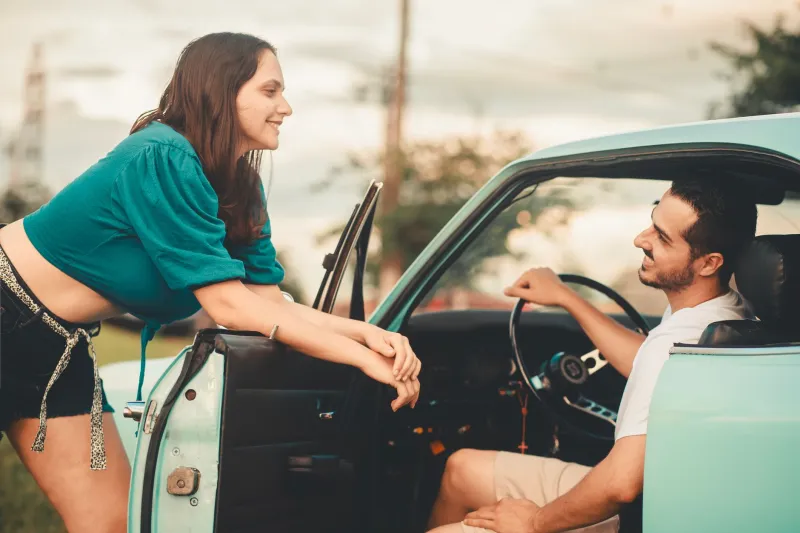
Laura was sitting in a diner booth in Taos, New Mexico, running her finger down a laminated menu she'd already made up her mind about, when the waitress leaned over and said, almost as an aside: "You know, if you're heading north, you really shouldn't skip Cimarron."
Laura hadn't heard of Cimarron. She wasn't heading north, particularly. She had a loose plan that involved Santa Fe and then home. But something about the way the woman said it — not like she was reciting a tourism script, but like she was telling a secret — made Laura put down the menu.
"What's in Cimarron?"
The waitress smiled. "Everything."
Three days later, Laura was still there.
The Conversations Nobody Writes About
Travel content is full of itineraries and packing lists and ranked hotel recommendations. What it's almost never full of is the moment a stranger said something that sent a trip sideways in the best possible way. These stories are hard to package. They don't repeat. They don't scale. And they sound, when you try to retell them, almost too convenient to be true.
But they happen constantly. And the travelers who collect them tend to have one thing in common: they were paying attention when the moment arrived.
Here are a few of those moments — and what made them possible.
The Gas Station That Redirected a Road Trip
Dan had been driving across the Texas Panhandle on a route he'd taken twice before when he stopped for gas outside of Amarillo. He was planning to push through to Oklahoma City that night. The guy at the next pump — older, wearing a cap that said something about a tractor pull — glanced at Dan's out-of-state plates and asked where he was headed.
Dan told him. The man was quiet for a moment, then said: "You ever been to Palo Duro Canyon?"
Dan had not. The man described it the way people describe things they love without expecting you to understand: "It's like the Grand Canyon, but nobody knows about it, and you can actually be alone in it."
Dan pulled out his phone and looked it up. Palo Duro Canyon State Park — the second-largest canyon in the United States, about thirty miles south of where he was standing. He'd driven past the exit twice in his life and never once considered stopping.
He went. He spent two days there. He called it the best camping he'd ever done in the continental United States.
"If I'd been listening to a podcast," he said, "I wouldn't have heard him."
Why Strangers Talk to Each Other Differently When Someone's Traveling
There's something that happens in travel contexts that doesn't happen in ordinary life. Strangers become unusually generous with information. A bartender who would never narrate your neighborhood to a local will spend twenty minutes drawing you a mental map of their city. A park ranger who gives a hundred people the same rehearsed spiel will sometimes, when the crowd clears, tell you about the trail that isn't on the official map.
Part of this is the psychology of the expert. People love being the person who knows something you don't. When a traveler arrives, they create a perfect audience for local knowledge — someone who actually wants to hear it, who hasn't already been told, who will genuinely appreciate the tip.
Part of it is also something less transactional. Travel is one of the few contexts in which it's socially acceptable to be openly curious and openly lost. And people respond to that openness with openness of their own. The traveler who admits they don't know where to eat, what to see, or which road to take is giving the person across from them a gift: the opportunity to help.
The Park Bench That Became a Philosophy
Nadia was on her first solo trip — a week in the Pacific Northwest with no fixed plan beyond a rental car and a general direction. She was sitting on a bench in Port Townsend, Washington, eating a sandwich and feeling slightly adrift, when an older woman sat down beside her.
They exchanged the usual pleasantries. The woman asked if Nadia was visiting. Nadia said yes, that she was kind of just figuring it out as she went.
The woman nodded like that was the right answer. Then she said: "The best thing about this town is what happens if you walk up that hill on a Thursday evening."
It was Thursday. Nadia walked up the hill.
What she found was an informal gathering — artists, retirees, a few younger people, someone with a guitar — that had apparently been happening every Thursday for years on someone's porch. The host saw Nadia standing uncertainly at the edge of the yard and waved her in. She stayed for four hours. She still exchanges emails with two people she met that night.
"I almost didn't ask what was up the hill," she said. "I almost just said 'oh, neat' and kept eating my sandwich."
What Made These Conversations Different
Look across these stories and a pattern emerges. In every case, the traveler did something specific that made the conversation possible:
They were not performing busyness. No earbuds. No phone out. No visible agenda. They were just present, in the way that invites people to speak to them.
They asked a follow-up question. Every single one of these exchanges could have ended at the first sentence. Laura could have said "thanks for the tip" and gone back to the menu. Dan could have nodded and gotten back in his car. The conversation that changes a trip requires you to lean in — to ask why, or what's there, or what do you mean?
They believed the person. There's a reflexive skepticism that kicks in when a stranger makes a recommendation — a suspicion that they're being sold something, or that their taste doesn't match yours, or that it won't live up to the hype. The travelers in these stories suspended that skepticism long enough to find out.
They were traveling without a locked itinerary. You can't act on a spontaneous recommendation if your schedule has no room for spontaneity. The most important thing these travelers had in common wasn't luck. It was flexibility.
How to Position Yourself for the Good Conversations
You can't manufacture this stuff. But you can make yourself available to it.
Sit at counters and bars, not tables in corners. Order something local and ask the person serving it what it is. When someone asks where you're headed, tell them — and then ask if they know anything about it. Linger in places where locals linger: hardware stores, laundromats, community bulletin boards, the kind of coffee shop where the regulars have their own mugs.
And when someone says something that sounds like the beginning of a story — when a waitress leans in, or a stranger at a gas pump asks where you're headed — put down the menu. Turn off the podcast. Ask the follow-up question.
Because somewhere out there, someone is about to say something that rewrites your whole trip. The only question is whether you'll be listening.