Schedule Nothing: How Leaving Blank Space on Your Itinerary Unlocks the Trips You'll Actually Remember
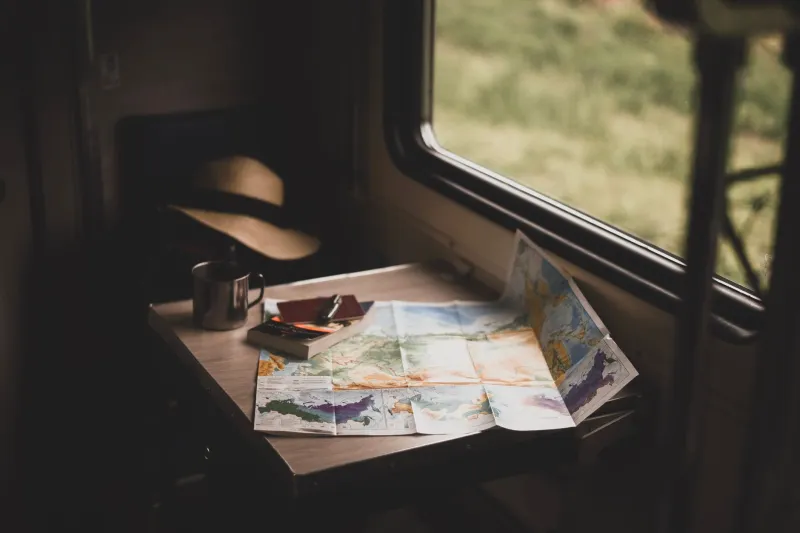
There's a particular kind of traveler who arrives at a destination with a color-coded spreadsheet, a laminated map, and fifteen browser tabs open before the plane even lands. Maybe you've been that traveler. Maybe you are that traveler. And honestly? There's nothing wrong with preparation.
But here's the thing nobody puts in the travel guides: the moments you'll be talking about five years from now almost certainly weren't on that spreadsheet.
The detour into the roadside ceramics studio in rural New Mexico. The afternoon you spent watching a pickup dominoes game in a Louisiana town square because your GPS quietly gave up. The jazz trio you stumbled into at a bar in Asheville because you got hungry an hour earlier than planned. None of that was scheduled. All of it was unforgettable.
So what separates travelers who consistently stumble into magic from those who come home with a perfectly executed checklist and somehow feel like they missed something? It comes down to a surprisingly simple principle: they left room.
The Psychology of the Open Hour
Researchers who study travel satisfaction have found something counterintuitive — the more tightly a trip is scheduled, the more likely travelers are to report feeling rushed, stressed, and oddly disconnected from the places they visited. When every hour is accounted for, the brain shifts into logistics mode. You're not experiencing a destination; you're completing it.
Leave a few hours genuinely open, though, and something shifts. Your senses sharpen. You notice the handwritten sign for a farm stand down a gravel road. You accept the coffee shop owner's suggestion to check out the old mill because, hey, you've got time. You're no longer moving through a place — you're actually in it.
Psychologists call this kind of open awareness "diffuse attention," and it's the mental state most associated with creativity, connection, and memory formation. Tightly packed itineraries actively suppress it. Blank space on a schedule invites it.
The 20% Rule That Experienced Travelers Swear By
Here's a practical framework that seasoned road-trippers and globe-hoppers keep coming back to: reserve roughly 20 to 30 percent of your trip time as genuinely uncommitted hours.
On a seven-day trip, that's roughly one and a half to two full days with no agenda whatsoever. It sounds like a lot. It isn't. And the way you distribute that time matters.
Rather than lumping all your open time at the end of the trip (when you're tired and half-checked-out anyway), try scattering it throughout. Build in one completely unscheduled afternoon every two or three days. Leave mornings open on days when you've got an evening activity. Give yourself permission to cancel the thing you booked three months ago if something more interesting presents itself on the ground.
The key distinction here is the difference between aimless wandering and strategic openness. You're not drifting without purpose — you're creating the conditions for purpose to find you.
What "Strategic Spontaneity" Actually Looks Like
Let's get concrete. Strategic spontaneity isn't about throwing your plans out the window. It's about building a flexible architecture that can absorb detours without collapsing.
Start with anchors, not schedules. Identify two or three non-negotiables per day — the things you'd genuinely regret missing. Book those. Everything else stays fluid. If you're in Portland, Oregon, maybe the Saturday Market and a specific dinner reservation are your anchors. Everything between them? Wide open.
Follow friction instead of fighting it. When something unexpected slows you down — a road closure, a long line, a sudden rainstorm — resist the urge to immediately problem-solve your way back to the itinerary. Sit with it for a moment. Some of the best detours in travel history started with someone asking, "Well, what else is around here?"
Talk to people who aren't trying to sell you anything. The woman walking her dog near your rental. The guy refilling the coffee urns at the diner. The teenager skateboarding past the museum you just left. These are your local informants, and they know things no algorithm does. Give yourself enough unscheduled time to have those conversations without one eye on the clock.
Say yes to the thing that sounds slightly inconvenient. The ferry that only runs twice a day. The hike that adds forty-five minutes to your drive. The dinner invitation from someone you met at the farmers market. Inconvenience, in travel, is often just opportunity wearing a disguise.
Real Detours, Real Payoffs
Talk to enough experienced travelers and a pattern emerges fast. Ask them about their best trip moments and almost universally, the answer involves something unplanned.
A couple driving Highway 1 in California blew a tire near Cambria and spent four unexpected hours exploring the town while waiting for a repair shop to open. They found a gallery selling work by a local painter they'd never heard of, bought two pieces, and have stayed in touch with the artist for years.
A solo traveler in the Texas Hill Country took a wrong turn outside Fredericksburg and ended up at a family-run winery that doesn't show up on any major review platform. She was the only customer. The owner poured her three unlisted wines from a back cellar and told her stories about the German immigrant families who settled the region. She called it the best afternoon of a two-week trip.
A group of friends road-tripping across the Southwest got rained out of a canyon hike in Utah and improvised a full day in a small town they'd planned to drive straight through. They ended up at a diner run by a family who'd been in business since 1952, caught a high school basketball game that night, and still talk about it as the highlight of the whole trip.
None of these were in the itinerary. All of them required one thing: available time.
How to Get Comfortable With the Blank Page
For planners — and there's no shame in being a planner — genuinely open time can feel uncomfortable at first. The impulse to fill it is strong. Here are a few ways to ease into it.
Try framing unscheduled time as an active choice, not a gap. You're not failing to plan; you're planning to explore. That reframe matters more than it sounds.
Give yourself a loose prompt instead of an agenda. "Find somewhere interesting to eat lunch that isn't on any list I've already looked at" is a mission, not a schedule. It gives you direction without removing discovery.
And if you really struggle with ambiguity, start small. One unscheduled morning on a five-day trip. One afternoon with no destination. See what happens. Chances are, what happens is something you didn't see coming — and something you won't stop thinking about on the drive home.
The Whole Point of Going Somewhere
Travel apps and review platforms are extraordinary tools. They help you find the genuinely excellent restaurant and avoid the genuinely terrible one. Use them. Just don't let them replace the experience of actually being somewhere with your eyes open and your schedule loose.
The best version of any trip isn't the one that went exactly according to plan. It's the one where the plan made enough room for the place to surprise you.
Leave some blank space. Something wonderful tends to fill it.