Two Days in the Town You Almost Drove Past
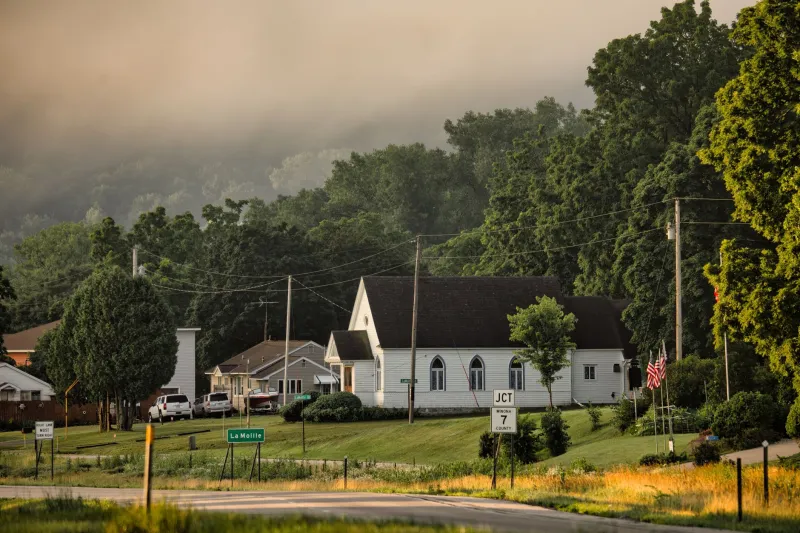
The Snap Judgment Problem
You're planning a road trip through the Midwest. You're looking at a map, clicking through towns, and something called Galena, Illinois comes up. It's small. It's not on anyone's major list. The photos look fine but not spectacular. You spend about 45 seconds considering it before moving on to somewhere with a higher number of reviews and a cleaner Instagram presence.
This is one of the most common travel mistakes people make, and it happens before the trip even starts.
We are, by nature, cognitive misers. Our brains are constantly looking for shortcuts to avoid spending energy on decisions, and travel planning is no exception. When we evaluate a destination in a few seconds based on a thumbnail and a one-line description, we're not actually assessing the place — we're pattern-matching against places we already know and making a judgment call based on surface similarity.
The problem is that the places most worth visiting are often the ones that don't photograph well from the outside, don't have a clean narrative pitch, and don't show up in the first five search results. Their value is experiential, relational, and cumulative — which means it requires time to reveal itself.
Why 48 Hours Is the Magic Number
One night in an unfamiliar town rarely tells you anything useful. You arrive, find food, sleep, leave. Your impression is based almost entirely on the quality of your hotel room and whatever you managed to eat for dinner.
Two full days is a different experience entirely. By the end of the first morning, you've started to learn the geography. By afternoon, you've had at least one accidental conversation. By the second morning, you recognize the coffee shop owner. By the time you leave, you have a relationship with the place — however small — that couldn't have formed in 18 hours.
This isn't sentiment. It's how familiarity works. Psychologists call it the mere exposure effect: we tend to develop more positive feelings toward things we've spent more time with, even when we weren't actively engaging with them. A place you've slept in twice, eaten breakfast in, and wandered through without a plan feels fundamentally different from a place you passed through once.
The 48-hour rule is a commitment to giving a place enough time to show you what it actually is, rather than what it looks like from the highway.
The Bias We Don't Notice
There are a few specific cognitive traps that cause travelers to dismiss places prematurely, and it's worth naming them.
The Instagram Gap. Some places are extraordinarily photogenic and mediocre to actually visit. Others are the opposite — visually unremarkable but rich with character, history, and human texture. We've trained ourselves to evaluate destinations visually before visiting them, which systematically disadvantages places that don't photograph well.
The Between-Places Bias. Towns that sit between two more famous destinations get mentally categorized as transit points rather than destinations in their own right. If you're driving from Nashville to New Orleans, everywhere in between feels like an obstacle. But some of those in-between places — small Mississippi Delta towns, for instance — contain more cultural depth than either endpoint.
The "Nothing to Do" Assumption. This one is almost always wrong. Every place has things to do. What it might lack is things that show up on a standard travel checklist. The question isn't whether a place has activities — it's whether you're willing to find the ones that aren't on any list.
Reputation by Association. If a town is in a region you've mentally written off — the Rust Belt, rural Appalachia, the flat middle of Kansas — you may be dismissing it based on a stereotype rather than any actual knowledge of the specific place.
Case Studies in Almost-Skipped Places
A couple driving from Chicago to Montana almost bypassed Missoula, Montana entirely because they figured it was "just a college town." They stopped only because one of them needed to use a real bathroom. They ended up staying four days, largely because of a conversation at a fly-fishing shop that led them to a river canyon most visitors never see. They've been back three times.
A solo traveler doing a loop through the South had Natchez, Mississippi on her list as a one-night stop between New Orleans and Memphis. She almost cut it when she was running behind schedule. She stayed anyway — and spent a full day with a local historian who walked her through antebellum houses that were still privately owned, with stories that no tour group ever hears. She describes it as the most quietly overwhelming day of a two-week trip.
Another traveler almost skipped Bisbee, Arizona because it looked, in photos, like a cute but forgettable former mining town. He gave it two days because he couldn't find a decent hotel anywhere else nearby. He found an underground mine tour that turned into a three-hour conversation with a retired miner about the history of labor organizing in the Southwest, followed by a late-night music session at a bar that had no sign and no Yelp listing.
The pattern is consistent: the magic didn't reveal itself immediately. It took time, and a willingness to stay.
A Framework for Identifying Places Worth a Second Look
Not every overlooked town is hiding a masterpiece. But here are some signals that a place might deserve more than a drive-through:
It has a specific history. Not just "founded in 1887" history, but a particular story — a boom-and-bust arc, an unusual cultural collision, a specific industry that shaped everything about how the town is laid out and who lives there. These places tend to have layers.
Locals seem to actually like living there. This sounds obvious, but it's worth paying attention to. If you stop for gas and the person behind the counter seems genuinely content rather than counting the days until they can leave, that's information.
It's inconvenient to get to. Places that require a detour to visit tend to have lower tourist saturation, which means more authentic experiences and more locals who are genuinely happy to talk to you rather than exhausted by visitor volume.
You can't immediately summarize it. If you're struggling to explain what a place is "about" in a single sentence, that's often a sign it's too complex to flatten into a pitch — which usually means it's more interesting than places that market themselves cleanly.
Give It 48 Hours
The next time you're planning a trip and you find yourself moving past a town after 30 seconds of consideration, stop. Ask yourself honestly: am I skipping this because I actually know it's not for me, or because I haven't given it enough thought to know either way?
If it's the latter, consider the 48-hour test. Book two nights. Leave your expectations loose. Show up without a checklist.
The towns we almost drive past have a funny way of becoming the ones we talk about for years.